
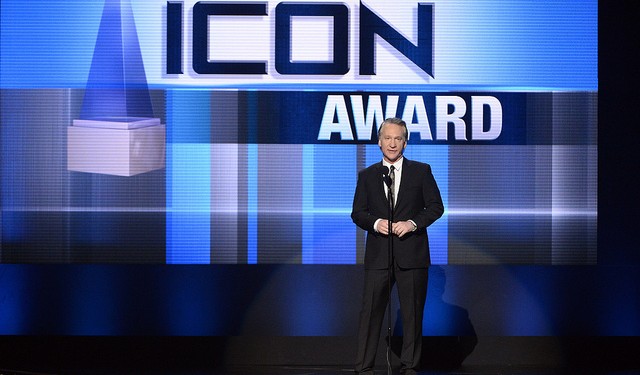
In response to one of Bill Maher’s recent anti-Islam tirades, a student group at the University of California at Berkeley petitioned the university to disinvite the talk-show host as their commencement speaker, citing Maher’s “offensive and dangerous rhetoric.” This petition, and Berkeley’s subsequent decision to not rescind Maher’s invitation in spite of the protest, has prompted many self-proclaimed guardians of liberal values to decry this petition as a restriction on free speech.
A recent article on The Atlantic linked this student protest to previous student protests of their university’s commencement speakers and award recipients, such as Brandeis University’s rescinding of their honorary degree to Ayaan Hirsi Ali due to her anti-Islam rhetoric, or Condoleeza Rice’s cancellation of her speech at Rutgers as a result of student protests of her involvement in the Iraq War. The article, written by David Frum, went on to label these student movements as a “danger,” due to their restricting Maher’s right to free speech and to criticize Islam.
I’m not going to bother to refute Maher’s hate speech towards Islam here, because it’s 2014 and if you’re still unable to make a distinction between political violence cloaked in the guise of religion and a 1400-year-old religious, philosophical, and legal tradition, I have nothing to say to you. But I’d like to address Maher’s anti-Islam rhetoric, or Islamophobia, within the broader context of its implications, as well as what this means for his freedom of speech.
Islamophobia is not about hurt feelings. Islamophobia has real impact on human lives, and incitement to Islamophobia has become so entrenched in the West that it’s difficult to understand where to begin to describe it to someone not on the receiving end of it.
At the individual level, Maher’s brand of incitement to Islamophobia led to the Wisconsin Sikh Temple shooting of 2012. Although Sikhs are not Muslims, of course, they are often perceived as Muslims, as are Arab Christians and Hindus. Also in 2012, a Hindu man was killed after being pushed onto the tracks of the subway in Queens, NY by a woman who later said, “I pushed a Muslim off the train tracks because I hate Hindus and Muslims ever since 2001…” Also in 2012, mosques were burned to the ground in Missouri and Tennessee due to arson. At the individual level, Islamophobia is a racist ideology that has everything to do with perception and nothing to do with reality, and often leads to Arabs and South Asians of different faiths feeling unsafe in the United States.
At the collective level, Maher’s brand of incitement to Islamophobia has resulted in the Iraq War, extrajudicial drone strikes in western Pakistan, veil bans, the NYPD’s spying on NYC’s Muslim community, and racial profiling at airport security. Similar to the way entrenched anti-black sentiment in the United States justified the murder of Mike Brown, age-old Islamophobic tropes justify the hundreds of thousands of lives lost in American military operations in the Middle East.
“…Liberal, western culture is not just different – it’s better,” said Bill Maher, the comparison being made to the “culture” of the Muslim-majority world.
This statement, with its racist, ethnocentric underpinnings, forms the basis of Islamophobia – that there is a monolithic, Other culture inherent in all Muslims (or people perceived to be Muslims.) This perceived moral superiority of the West, cloaked in the guise of rational atheism versus tribal religiosity, forms the basis of American militarism in the Middle East. It allows the Western mind to resolve the cognitive dissonance that comes along with condemning the barbaric violence of ISIS while being complicit in a war that has resulted in the barbaric deaths of more Iraqis than even ISIS has been responsible for. It allows the Western mind to justify the bombing of wedding-goers in Yemen because there was a report of a “militant” among them, regardless of the fact that the name or nature of the “militant” was never made public. It allows the Western mind to purport freedom of expression while sitting idly by while a woman wearing a face veil is ejected from the Paris Opera after cast members refused to perform because of her presence.
Bill Maher’s incitement to Islamophobia isn’t criticism of Islam. It’s harmful bigotry that has a profound effect on those perceived to be Muslims both abroad and in the United States. When the Berkeley administration refuses to listen to its students’ voices calling for Maher’s invitation to be rescinded, they are not protecting free speech, but condoning hate speech with wide-reaching implications.
Photo courtesy of the Disney/ABC Television Group. Some rights reserved. No changes were made. Creative Commons License.
masonstudent
In the interest of disclosure, 4th Estate could have mentioned that the author of this article came to GMU on an Aziz Jamaluddin scholarship from the Islamic Society of North America.
The primary goal of this scholarship is to have a generation of educated Muslims to speak out and communicate the true meaning of Islam in all types of media.
http://www.isna.net/jamaluddin-scholarship.html
Antithesis86
I agree that Bill Maher is stereotyping when he claims ISIS is typical of Muslim civilization. The same man who’d disagree with all Atheists being judged by the Soviet Union still judges all Muslims by a violent minority???
Still, linking Maher’s comments to violence is a big, big stretch. When has Maher called for violence against Muslims? When has he ever praised the Sikh Temple shooting, or the bombing of civilians?
Last I checked, Maher’s antiwar. As he said:
“Forget the Syria debate, we need to debate on why we’re always debating whether to bomb someone… Because we’re starting to look, not so much like the world’s policeman, but more like George Zimmerman — itching to use force and then pretending it’s because we had no choice.”
Lumping him in with hawks Repubs / Dems on Middle East policy is problematic.
And he has good reason to assume our culture to be better, least when it comes to religious criticism.
When a Florida pastor whose church barely numbers above twenty threatened to burn the Qur’an, before he had even done it there were violent protests in numerous Muslim nations.
When a Danish author drew some sacrilegious cartoons of Muhammad, it sparked violent protests.
When was the last time violent protests broke out in many majority-Christian countries over threats to burn the Bible or sacrilegious cartoons?
Point is, if you want to talk incitement and violence, if you want actual examples of rhetoric and rumor leading directly to violence, go over to the cultures that Maher hates.
masonStudent
ahahahahah racist underpinning! ahhahaha Islam is a race ahahahhahaha! If you want to be taken seriously. Understand your enemy’s ideas, before making a fool of yourself. Who has taught you not tolerate criticism and to use the “I am offended” card as it constitute an argument? Take one for the team, everyone gets a piece of Maher. but, no, no no… you are special. Welcome to America.
Jinkies
I’ve recently read a book by Ayaan Hirsi Ali. While I don’t agree with all of her positions, it’s hard to deny her rough history and the harsh experiences of the women she’s met at the women’s shelters. I find myself respecting her opinions and her right to express them, even as I don’t feel they are entirely accurate.
The difficulty with the “freedom of speech” claim is that both sides of the issue can raise them. For me, the thorniness of the issue is not whether someone can say that Islam is bad or good (or Christianity, or bestiality, or existentialism, etc.). It’s the fact that certain people have the money and resources to say these things to a large audience. Again, that shouldn’t necessarily be a problem either–that is closely connected with the freedom to assemble. But when it is a captive audience, that is the problem. I don’t mind, for example, that Miley Cyrus displays herself openly in her concerts. But I would mind if I were forced to watch or attend her concerts. I’m thankful that this is not the case, and that I can choose to not watch or attend any concerts, speeches, etc. that I don’t enjoy or would find offensive.
In this sense, then, the students have all the right in the world to petition to not be forced to listen to Bill Maher, Condeleeza Rice, Oprah Winfrey, or Anne Hathaway at a commencement speech. That would make them a captive audience. If none of the students would have attended the commencement speech, it would be harder to make the cause of “standing” (I suppose, because it would tarnish the school’s reputation, and the students don’t want this reputation on their resumes? I’m not sure). But perhaps the students would not have protested at all had Bill Maher been invited to give a panel debate along with a celebrated speaker that has the opposite opinion on Islam. Now that might be something I’d attend.
Suhaib Khan
The problem with your criticism of this article is that you’re assuming I’m speaking to the opposition – I’m not. I had no intention of directing this piece towards Islamophobes/racists, because I don’t believe indirect engagement such as this will ever “win the opposition over.” This article was directed mainly at those who believe Islamophobia is an individual phenomenon without wider-reaching consequences.
I don’t understand your criticism that I don’t address the “meat of the issue” – I spend the entire latter half of the article explaining how our culture of Islamophobia allows us to relieve the cognitive dissonance that comes along with our military operations in the Middle East. I have no intention of addressing “opposing views” simply because they’ve been addressed countless times by others more qualified than me – scholars, religious leaders, journalists such as Tareq Ramadan, Reza Aslan, Linda Sarsour, Edward Said, Leila Ahmed, Lila Abu-Lughod, to name a few. The type of responses to “opposing views” you’re looking for (on what, I’m not too sure – Islam and domestic politics? Islamophobia? Free speech?) are issues that have had books written on them. The purpose of this 800 word op ed was to draw attention to the wider-reaching implications of Islamophobia and how Maher contributes to it – not discuss every related issue under the moon.
I appreciated your thoughtful response though, and I’d love to speak to you further. Feel free to email me at skhan28@gmu.edu!
masonstudent
“our culture of islamaphobia allows us”
Who is us, and which culture do you claim to be speaking on behalf of?
Since you yourself are a muslim, does your culture of islamaphobia mean you are terrified everytime you look in a mirror? Must be tough when you go to the mosque.
Matt Warner
“Similar to the way entrenched anti-black sentiment in the United States justified the murder of Mike Brown..”
No. After three autopsies and months of review, the jury couldn’t even bring a trial against Darren Wilson and the case is being dropped by the DOJ. Similarly, Bill Maher’s stance did not lead to the Sikh Temple shooting.
There is no evidence whatsoever to demonstrate that most people in the West are racist, islamophobic, or sexist or whatever you want to accuse it of. However, the giant elephant in the room is that Islam is the only religion left in the world where millions of people want to impose their exact world view on everyone at the threat of death. Is military intervention going to solve that? No, but holy cow it isn’t a religion of peace. The Islamic world is burning right now over a French cartoon. That’s totally incompatible with the most basic tenets of any free and peaceful society.
Jinkies
I agree wholeheartedly that military intervention is not a good idea. As far as the religion of peace question, here’s a quote from Alfred North Whitehead to consider:
“Religion carries two sorts of people in two entirely opposite directions: the mild and gentle people it carries towards mercy and justice; the persecuting people it carries into fiendish sadistic cruelty. Mind you, though this may seem to justify the eighteenth-century Age of Reason in its contention that religion is nothing but an organized, gigantic fraud and a curse to the human race, nothing could be farther from the truth. It possesses these two aspects, the evil one of the two appealing to people capable of naïve hatred; but what is actually happening is that when you get natures stirred to their depths over questions which they feel to be overwhelmingly vital, you get the bad stirred up in them as well as the good; the mud as well as the water. It doesn’t seem to matter much which sect you have, for both types occur in all sects….”
I’m still amateurish in my knowledge of these things, but I’ve lately found this and readings of MLK Jr. to be insightful.
Matt Warner
I completely accept that there are extremists in any religion. What I also accept is that Islam is especially brutal and anti-liberty relative to the other major religions around today.
And I’m not going to excuse people either and not hold them responsible just because “it’s their culture” or “it’s how they were brought up.” Virtually all individuals have moral agency and responsibility and their beliefs don’t excuse slaughter, regardless of what religion at hand.
Jinkies
I completely agree. Murder is murder. Torture is torture. These need to be stopped and its perpetrators held accountable–religion and culture are not excuses.
Rather, what concerns me is how the discussion of “Islam,” a religion with an enormous number of followers and a wide diversity of experiences, is being played with the same sort of narration in the media and some churches. For some, this has meant worry and antagonism misplaced over normal people with peaceable lives. The conversation, rather than being full and nuanced and searching for common ground and a solution, is more frequently centered on an “Islam leads to terrorism and hate” story. I’m okay with people arguing about whether Islam is violent, in the same way Christianity is argued as being misogynistic, or all religion being like heroine; these challenge my own thoughts and ask me to question my own preconceived notions, and hopefully after these discussions there is more understanding and desire to come together. But when these questions are no longer questions but the norm, and “opposing sides” are reduced to a narrow set of alternatives, that’s where tensions build and nonviolent, uniting solutions are overlooked.
I agree with a quote from Noam Chomsky: “The smart way to keep people passive and obedient is to strictly limit the spectrum of acceptable opinion, but allow very lively debate within that spectrum….” Here’s a link to one discussion, with Irshad Manji and Ayaan Hirsi Ali on the Fareed Zakaria show, presenting two different perspectives among the many that I know must be out there: https://www.youtube.com/watch?v=uVeiT0DHej0